
 Agostino Brusco
translated by Annalisa Nicastro
From the times of the Greek colonial conquests the entire valley of the Crati river has undergone considerable transformations. Originally the whole valley was a flat area, with marshes scattered almost everywhere, created by the Crati river, its tributaries and springs.
The Greeks transformed the plains, eliminating most of them, into fields for the cultivation of grain and the breeding of livestock (sheep). The Crati was also an important transport route for the Greeks first and later for the Romans, who mainly developed agricultural activities (cereals) and pastures. In the following centuries we witness a decline in the general conditions of life due to an economical crisis (the period of Spanish domination), to which are added very serious natural disasters (earthquakes, plague, flooding of the river Crati, etc.). With the start of a first industrial "system" there is a substantial recovery of the local economy (through the creation of spinning mills, tanneries, oil mills and agricultural activities).
In 1926 the first public reclamation works of the whole Crati valley were carried out. In 1959 work began on the construction of the dam built at the Strette di Tarsia, along the course of the Crati river, useful for the irrigation of the entire Sibari plain. The basin and the valley of the Crati river, which extends for about 2,440 square kilometers, fall entirely within the province of Cosenza. The Crati valley is crossed by the homonymous river, the longest in Calabria (81.2 km), which originates in Sila (Monte Timpone Bruno, 1,742 meters above sea level) and flows into the Ionian coast near Sibari. In 1990, on the proposal of the Environmental Protection Association "Amici della Terra Italia", the Calabria Region, with regional law n. 52, approved the establishment of the first two protected areas, located along the course of the Crati river, Lake Tarsia and the mouth of the river Crati.
The Regional Nature Reserve of Lake Tarsia, located in the province of Cosenza, was established by the Calabria Region in 1990 (LR of Calabria n. 52 of 1990) on the proposal of the Environmental Protection Association "Friends of the Earth Italy". It is also a Special Conservation Area (SAC) for the Natura 2000 Network, pursuant to Community Directive 92/43 / EC.
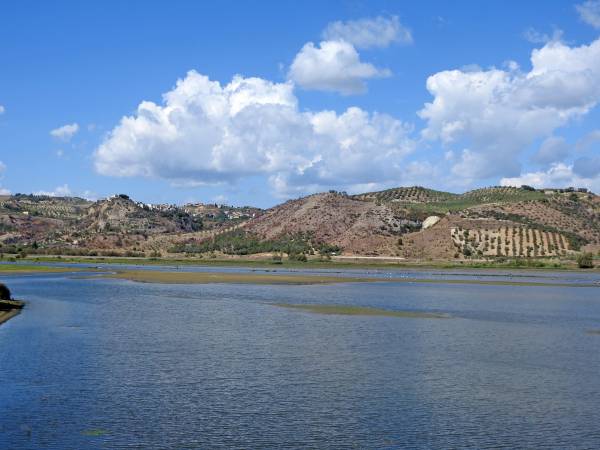
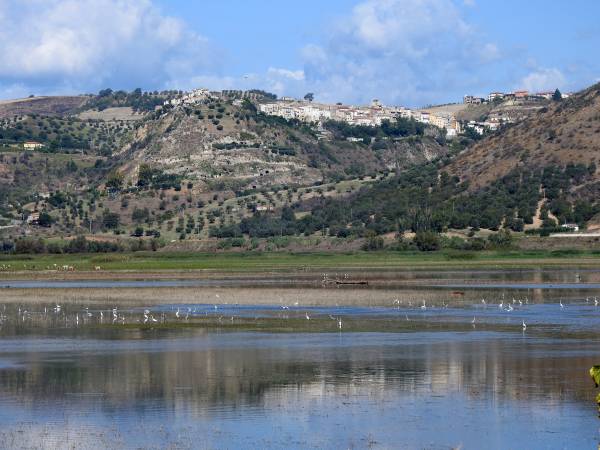
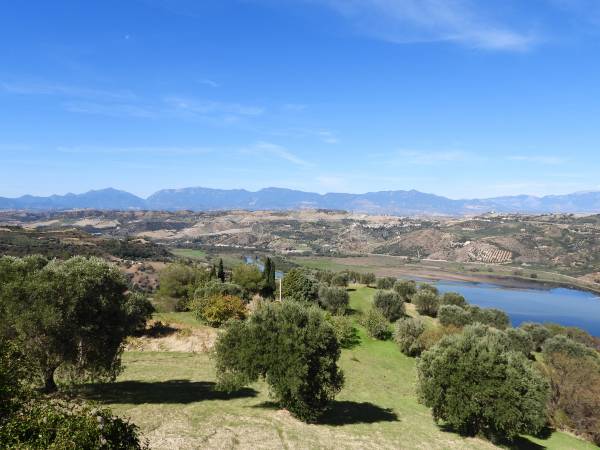
Lake Tarsia, a lake basin upstream of the Strette di Tarsia dam, falling within the territory of the municipalities of Tarsia and S. Sofia d'Epiro (Cs), represents an area of considerable naturalistic interest due to the existence of numerous ecosystems of value and for the great variety of plant and animal species. In the eastern part, the area presents a magnificent example of pristine and scarcely man-made Mediterranean scrub consisting of holm oak, elm, tamarisk and strawberry tree. It is also a Special Conservation Area (SAC) for the Natura 2000 Network, pursuant to Community Directive 92/43 / EC, better known as the "Habitat" directive.
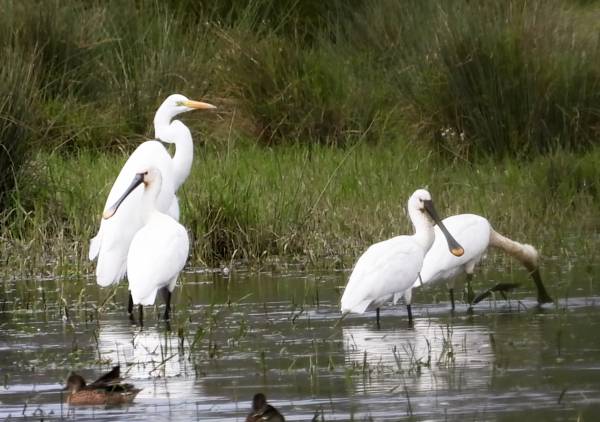
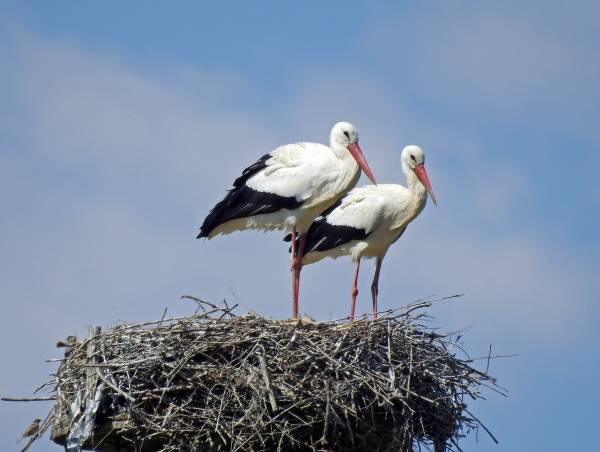
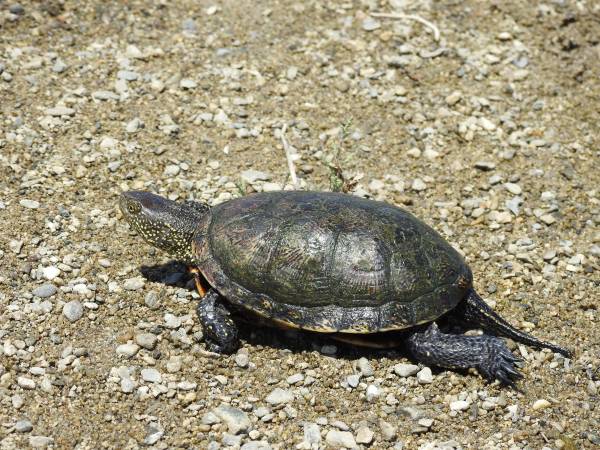
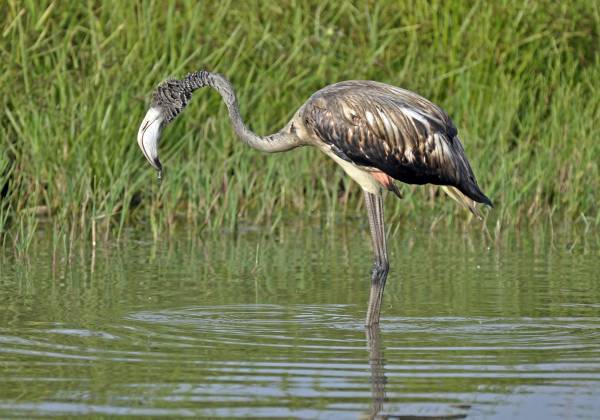
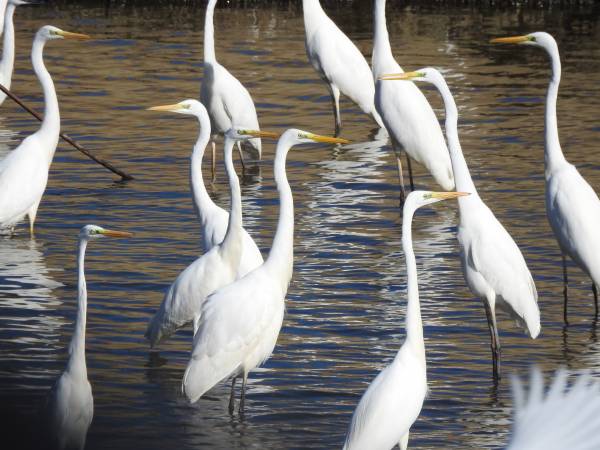
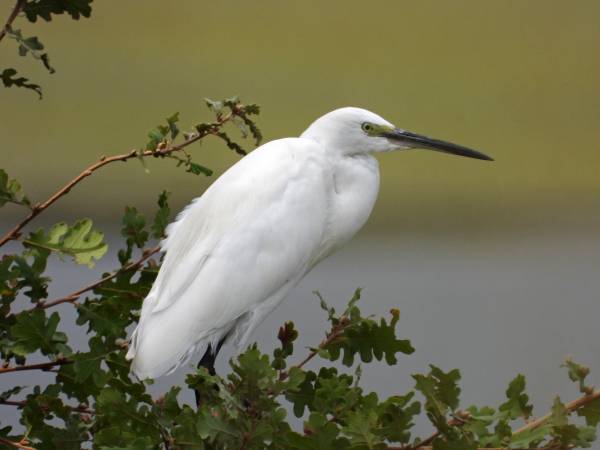
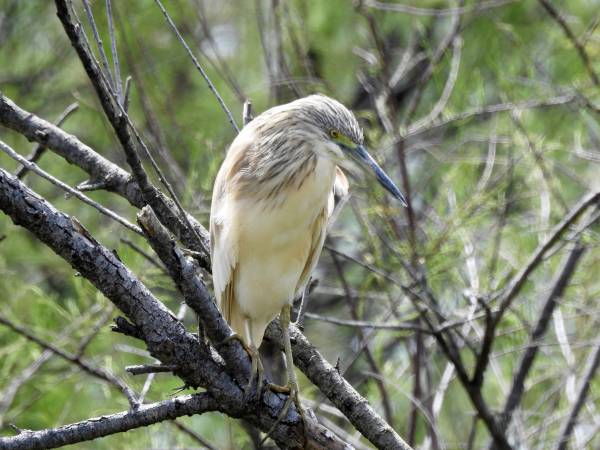
The institutive aims are the conservation and enhancement of natural resources, the didactic and naturalistic use and scientific research. Its animal and plant biodiversity is rich and diverse. For vertebrate fauna, 182 species of vertebrate fauna and 727 specific and subspecific taxa of flora have been ascertained. There are 7 habitats of community interest. The particular type of humid environment in the area favors an extraordinary and diverse fauna. Among the species of considerable naturalistic and conservation interest present, the following are mentioned: for the fish the Rovella (Sarmarutilus rubilio) and the Eel; for the Amphibians the Apennine frog (Rana italica), the European tree frog (Hyla intermedia) and the Apennine toad (Bombina pachypus); for the Reptiles the European pond turtle (Emys orbicularis), the Hermann's tortoise (Testudo hermanni h.), the tessellated Natrice (Natrix tesselata); for mammals the badger (Meles meles), the dormouse (Muscardinus avellanarius), the southern squirrel (Sciurus meridionalis); also for mammals, the presence of bats is interesting, with 13 known species, some considered very rare. Birds represent the most numerous category that in this area find the ideal environment for completing the different phases of their life cycle. Among them the White Stork (Ciconia ciconia), taken as a symbol of the Reserves; the black stork (Ciconia nigra), numerous herons and among them the great white heron (Egretta alba), the little egret (Egretta garzetta) and the gray heron; several Anatids such as the Pochard (Aythya ferina) and the Tufted duck (Aythya nyroca); waders such as the Italian Knight (Himantopus himantopus) and migratory birds of prey such as the Marsh Harrier (Circus aeruginosus), the Red Kite (Milvus milvus) and the Black Kite (Milvus migrans). Important for conservation purposes, as a species of passage during migrations, are the Crane (Grus grus) and the Pink flamingo (Phoenicopterus roseuse).
The managing body has established various and interesting services ranging from the protection and conservation of biodiversity (and among these the Botany Laboratory; the Environmental Analysis Laboratory; the Experimental Field of Wild Vine; the ex-situ Breeding Center of Apennine Ululone; the ex-situ Breeding Center of the Marsh Tortoise; the ex-situ Breeding Center of the Italian Triton), to structures responsible for didactic and naturalistic use, information and environmental education and among these:
- Visitor Centers of Tarsia (via Garibaldi, 4 - Palazzo Rossi) and of S. Sofia d'Epiro (Largo Trapesa, 1 - Palazzo Bugliari);
- The Natural History Museum of Calabria with Sections: in Tarsia, hosting the Dioramas dedicated to the Protected Areas of Calabria and in S. Sofia d'Epiro, the Herbarium of Crati;
- IlCEA (Center of Environmental Experience) “At School in Reserves”, of the InFEA Network;
- the Calabrese Naturalistic Library.
The Visitor Center, the Natural History Museum of Calabria, the Calabrese Naturalistic Library and the CEA are located in Tarsia in the historic palace of 1700, which belonged to the Rossi, one of the manor families of Tarsia. The Museum is one of the most interesting realities activated in the context of management for the use of the Reserves. One of the main purposes of the Museum is to promote the dissemination of scientific culture, encouraging the interest of the population, especially young people, in the natural sciences. The Museum also represents, through the activated poles, a very important reference for what concerns scientific dissemination and teaching, offering schools various training courses, differentiated for different school levels.
In this way, it is proposed as one of the main reference points for educational institutions in the area, which positively welcome the proposals and activities to be carried out in close collaboration with the managing body of the Reserves. An interesting aspect of the Reserves is to promote, raise awareness and enhance the natural, environmental and cultural resources of the area. In addition to other activities for the protection and conservation of the extraordinary and diversified biodiversity present, the Reserves, as an institutive purpose, also have that of encouraging the admission of the community to the enjoyment of conservation assets for cultural, scientific, educational and recreational purposes. Hence the idea of creating a structure dedicated to this purpose, a reference point for the entire district and the regional "system" of protected areas.
The Environmental Experience Center (CEA) "At School in the Reserves", accredited by the Calabria Region within the INFEA Network of the "Regional System of Environmental Information, Training and Education", carries out its activities on a continuous and free basis in favor of communities and educational institutions of all levels, developing training courses that: invest in the permanent education of the individual, since childhood, during which the basis of the individual's civic awareness is formed; they adapt to the cultural, environmental and social situations of the territory to which they are addressed; identify converging objectives and solutions; they involve and stimulate not only schools but also local institutions and the entire community. Starting from the conviction that environmental education must be conceived not only as a strictly educational training, but also, and in particular, as the formation of new cultural models, the Center promotes educational and training courses that contribute to rebuilding the sense of identity and roots of belonging of individuals and groups, to develop a civic sense and responsibility towards the res publica, to spread the culture of participation and care for the quality of one's environment, also creating an emotional relationship between people, the community and the territory.
To date, the Reserves, thanks to the structures created and the activities launched, annually guarantee these services to approximately 10,000 visitors and students of all levels. Another important service established by the Reserves is the Calabrese Naturalistic Library, located inside Palazzo Rossi di Tarsia. The structure is spread over an exhibition area of over 120 square meters and is divided into 4 spaces divided as follows: two reading rooms (DARWIN room and LORENZ room), a magazine room and a management and archiving room. The Calabrese Naturalistic Library is one of the very few in Italy that specializes in Natural and Environmental Sciences and is a reference point for those, scholars, students, naturalists who deal with issues related to the environment and the territory.
Tarsia is a town that has given birth to several illustrious personalities, including Marco Aurelio Severino (1580-1656), an illustrious doctor and zoologist who started in Naples the study of a group of mammals (in particular insectivores, such as the mole and the curly). The same was the author in 1645 of the Zootomia Democritea, still considered today as one of the first Italian treatises on comparative anatomy, and is home to the former concentration camp of Ferramonti di Tarsia and the "Ernst Bernhard" Literary Park. Opened in June 1940, Ferramonti was the largest Italian fascist concentration camp. Evacuated in September 1945 and definitively closed on December 5, 1945, today it houses the International Museum of Memory Ferramonti in Tarsia.
The purpose of the museum is to concretely preserve the identity and historical memory, as well as preserve and disseminate the historical heritage of the concentration camp. For years, the Reserves have started and consolidated a synergistic collaboration relationship with the Ferramonti Museum that has led to the development of common paths in the context of the enhancement of the territory and its natural and cultural resources, directing students, citizens and tourists towards a path unitary that sees the territory and the landscape at the center, as the environment is not only nature, but the result of a close relationship between nature and culture, between human activity and the evolution of nature itself.
The Headquarters of the Reserves (Lago di Tarsia and Foce del Crati) is in Palazzo Rossi, one of the most beautiful patrician palaces in Tarsia, where in addition to the Offices it houses the services listed above and is also the seat of the Didactic-Scientific Center of the Reserves.
Riproduzione riservata © Copyright I Parchi Letterari

 C/O Società Dante Alighieri


